
Services05
Climate & Natural Hazard Risk Assessment
Understanding how a building is exposed to flooding, heat, storms and other physical risks.
- Used for
- BREEAM In-Use, ESG due diligence, EU Taxonomy, acquisitions, portfolio risk management and resilience planning.
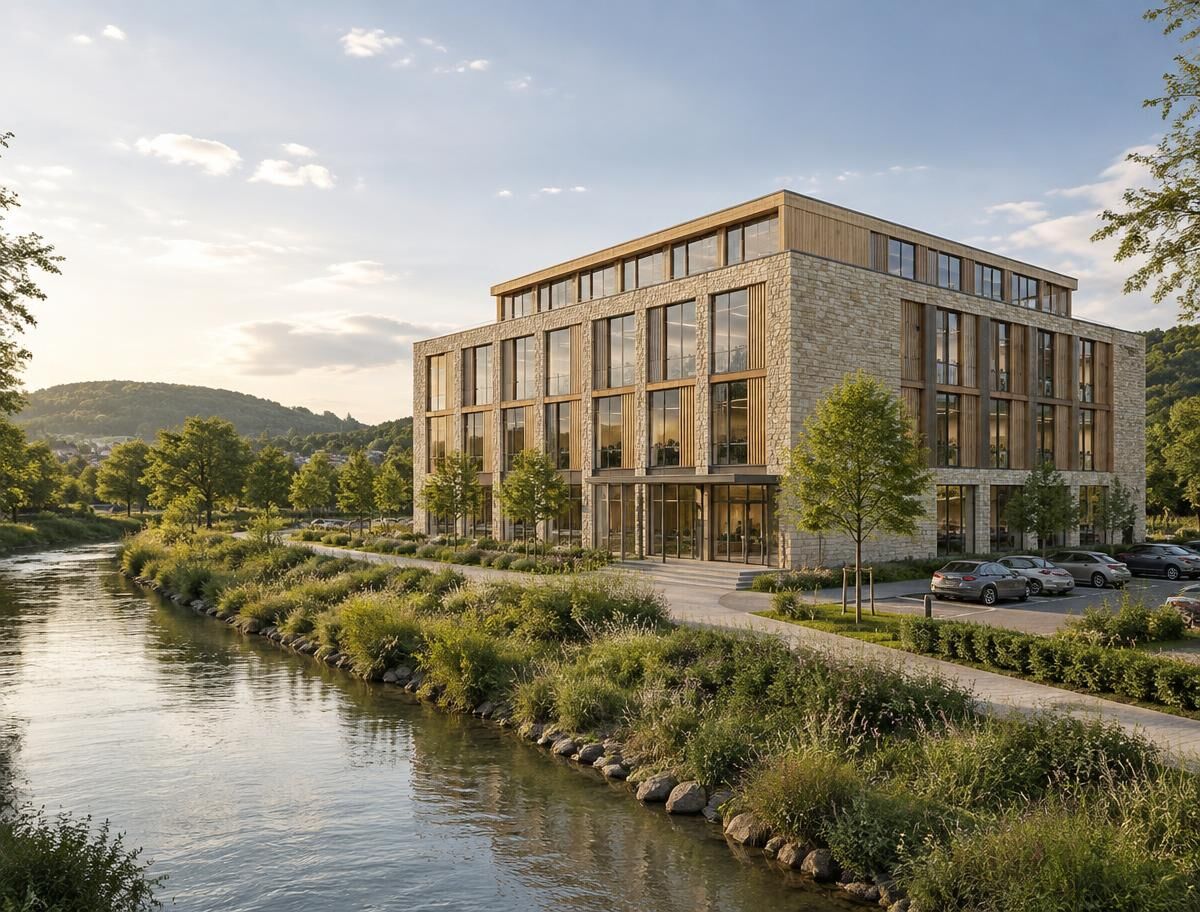
Asset → Analysis → Risk / opportunity → Action → Improvement
Physical climate risk — example panel
- Floodmoderate
- Extreme heathigh
- Stormmoderate
- Droughtlow
How we assess it
- 1Hazard
- 2Exposure
- 3Vulnerability
- 4Potential consequence
- 5Mitigation
- 6Residual risk
| Finding | Action | Priority | Timing | Potential effect |
|---|---|---|---|---|
| Heat exposure on south façade | External shading, planting, cooling strategy | High | Next CAPEX cycle | Lower overheating risk |
| Flood exposure near river | Drainage strategy, raise sensitive equipment | High | 0–12 months | Less interruption risk |
| Wind-exposed roof equipment | Roof and façade resilience review | Medium | 1–2 years | Reduced damage exposure |
| Water-hungry landscaping | Resilient planting and water strategy | Longer term | 2–3 years | Less water stress |
Illustrative example — demonstration data, not based on a specific building.
These results are indicative only and cover only part of the criteria considered in a full assessment. They do not constitute a complete assessment, certification or confirmation of compliance.
01 — What is it?
What is a climate risk assessment?
A climate and natural hazard risk assessment looks at how a specific building and its location could be affected by events such as flooding, heatwaves, drought, storms, wildfire or ground movement, both today and as the climate changes over the coming decades.
It combines location data with an understanding of the building itself: its construction, systems, protection measures and how it is used. The result is a clear picture of which risks matter, how well the building is prepared, and which adaptation actions are worth considering.
02 — Why does it matter?
Why it matters
- 01
Identifies risks that can affect value, insurance, operations and occupant safety.
- 02
Meets requirements found in BREEAM In-Use, the EU Taxonomy and ESG due diligence.
- 03
Turns broad climate information into building-specific conclusions.
- 04
Highlights existing protection and practical adaptation options.
- 05
Supports informed acquisition and long-term planning decisions.
- 06
Links each risk to possible consequences and to measures that reduce exposure.
- 07
Identifies potential damage exposure, operational interruption and future adaptation CAPEX, supporting better-informed resilience and insurance discussions.
03 — When is it used?
Typical situations
- Acquisitions and transaction due diligence.
- EU Taxonomy alignment and reporting.
- BREEAM In-Use assessments.
- Portfolio risk reviews and resilience planning.
04 — Our approach
A clear sequence of steps
- 01Scope and hazard screening
- 02Location and exposure analysis
- 03Building vulnerability review
- 04Risk rating and prioritisation
- 05Adaptation recommendations
- 06Reporting for certification or due diligence
05 — Typical scope
Typical applications
- Single assets
- Portfolios
- Acquisitions
- Certification evidence
- Resilience planning
06 — Related services
Often combined with


Need to Understand Climate Risk for a Building?
Tell us about your building or project and we will come back to you with a clear view of the next steps.