
Services06
Life Cycle Assessment (LCA)
Measuring the environmental impact of a building and its materials across their whole life.
- Used for
- Building design, renovation, embodied carbon assessment, material selection, BREEAM and whole-life carbon studies.
Asset → Analysis → Risk / opportunity → Action → Improvement
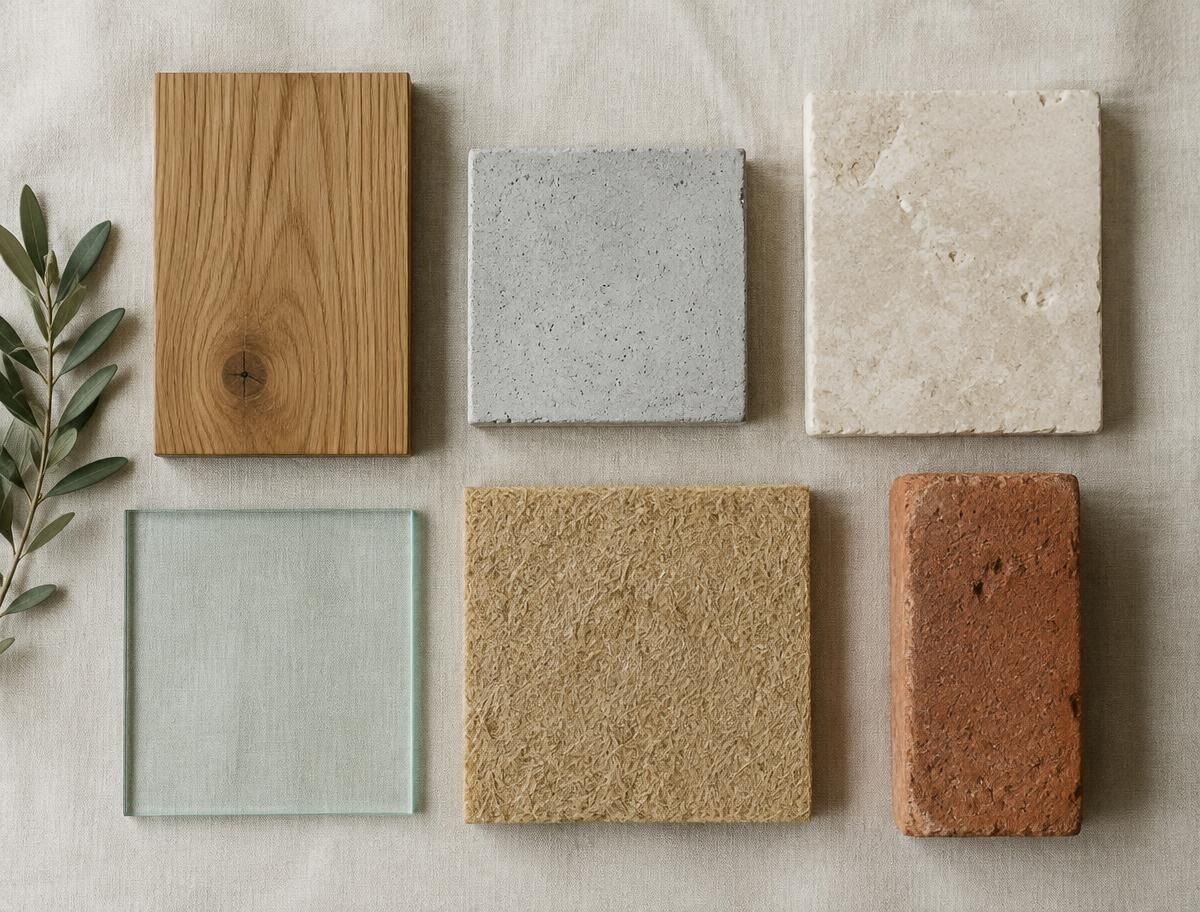
The whole life of a material
- Raw material
- Manufacturing
- Construction
- Use
- Replacement
- End of life
Comparing two façade options — relative impact
LCA helps us understand the environmental consequences of material and design choices before important decisions are finalised.
Illustrative example — demonstration data, not based on a specific building.
These results are indicative only and cover only part of the criteria considered in a full assessment. They do not constitute a complete assessment, certification or confirmation of compliance.
01 — What is it?
What is a Life Cycle Assessment?
A Life Cycle Assessment measures the environmental impact of a building, a building element or a material across its whole life: extracting and making the materials, transporting them, constructing the building, using and maintaining it, and eventually taking it apart or reusing it.
The best-known result is embodied carbon, but an LCA can also look at water, resources and other impacts. It is most useful when there are choices to make, for example between a new build and a refurbishment, or between different structural or façade materials.
02 — Why does it matter?
Why it matters
- 01
Shows where a building's environmental impact actually comes from.
- 02
Supports better decisions on materials and construction methods.
- 03
Provides embodied carbon figures required by many certifications and regulations.
- 04
Helps compare renovation and new-build options fairly.
- 05
Supports material and design choices before they become expensive to change.
03 — When is it used?
Typical situations
- Early design stages when major material choices are made.
- Renovation versus new-build comparisons.
- Certification projects requiring whole-life carbon evidence.
- Material and product selection.
04 — Our approach
A clear sequence of steps
- 01Goal and scope definition
- 02Building and material data collection
- 03Life cycle modelling
- 04Option comparison
- 05Results and recommendations
- 06Reporting for certification or design teams
05 — Typical scope
Typical applications
- New buildings
- Renovations
- Embodied carbon studies
- Material comparison
- Certification evidence
06 — Related services
Often combined with
Considering the Whole-Life Impact of a Project?
Tell us about your building or project and we will come back to you with a clear view of the next steps.